








The pesticide industry will end with many highlights in 2025: strict policy supervision, new technological breakthroughs, and product development
As 2025 comes to an end, the pesticide industry will usher in multiple benefits in terms of policies, technologies, and products, and the industry's transformation towards green, standardized, and high-end will continue to accelerate. The Ministry of Agriculture and Rural Affairs has intensively introduced management policies to solidify the bottom line of the industry, scientific research institutions and enterprises have joined forces to overcome technical difficulties, and a number of innovative products have been approved and registered, laying a solid foundation for high-quality development of the industry in 2026.
On December 23, the Ministry of Agriculture and Rural Affairs issued the "Notice on Further Standardizing Pesticide Management", which clearly stipulates the six core links of pesticide registration, production and operation, registration testing, and labeling, and further refines management requirements.
In the pesticide registration process, it is clear that the entrusted agent needs to designate the registration information officer of the unit. The renewal of the registration certificate is only applicable to the name change of the registration certificate holder and the merger or split of the enterprise. For the entrusted production of pesticides, it is required to sign a formal contract and provide complete technical information, and the products must not be marked with the trustee's trademark, so as to eliminate OEM chaos from the source.
In view of the emerging model of pesticide sales on the Internet, the "Notice" requires operators to register with the licensing authority and comprehensively display operator qualifications and product-related information to ensure that online pesticide transactions are traceable; at the same time, we will severely crack down on fraud in pesticide registration tests, clarify the specific circumstances of test unit violations, and build a solid line of defense for the quality and safety of pesticide products.
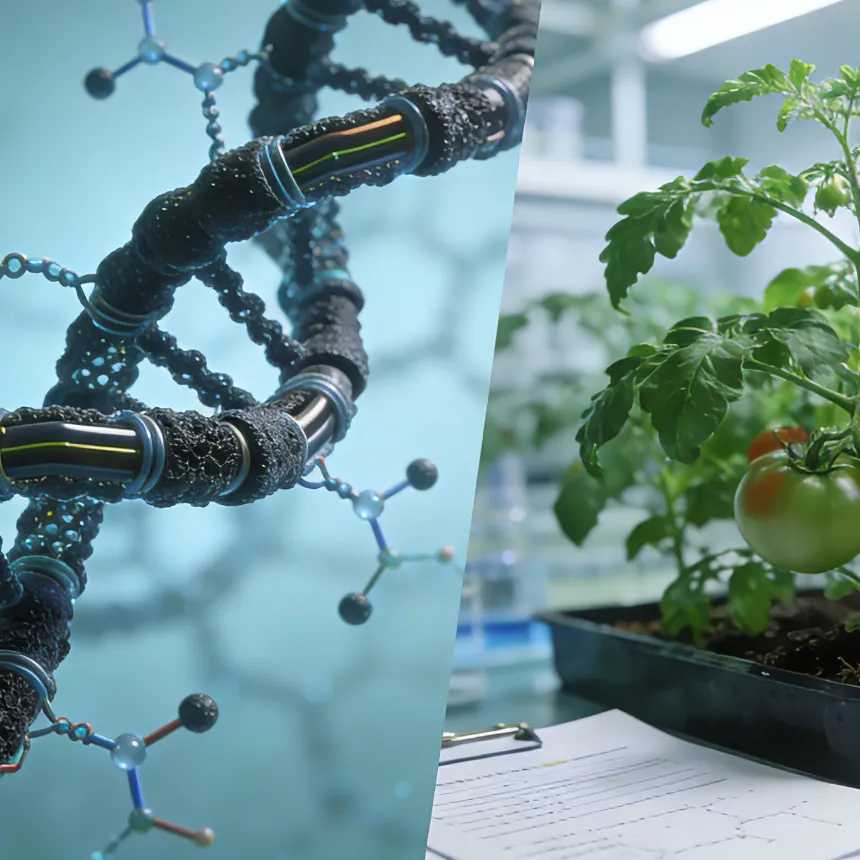
At the end of the year, a number of technological achievements in the field of pesticides were implemented, providing new support for the development of green agriculture. On December 28, Cao Mengji’s team from Southwest University’s Citrus Research Institute published a research paper in the international journal Advanced Science, constructing a biological carbon nanotube (BioCNTs) systemic RNAi nano-biopesticide delivery system for the first time to achieve efficient prevention and control of multiple viruses in tomatoes.
This technology combines biological carbon nanotubes with TLS sequences that have the ability to move systematically. It not only achieves efficient loading and stable protection of exogenous RNA molecules, but also gives them long-distance transport capabilities, and can exert control effects on untreated plant parts after spraying. Experimental data shows that this system inhibits the accumulation of three important viruses, including tomato spotted wilt virus and tomato mosaic virus, by 58%-88%, and has no negative impact on plant growth or photosynthesis, showing great potential for safe, green, and large-scale applications.
On December 25, the phage pesticide results developed by Peng Donghai’s team at Huazhong Agricultural University were successfully transferred for 30 million yuan, and is expected to become the country’s first phage pesticide product. Unlike traditional chemical pesticides, phages can accurately hunt pathogenic bacteria without harming beneficial bacteria, and can effectively solve the problem of bacterial disease prevention and control such as bacterial wilt. The results of this transfer cover the two major fields of crop diseases and aquatic diseases, and will promote the commercialization of microbial pesticides.
On December 29, the Pesticide Control Institute of the Ministry of Agriculture and Rural Affairs announced that the 14th batch of new pesticide products will be approved for registration in 2025. 16 new pesticide products have entered the publicity stage, covering multiple categories such as acetozolin and flufenacet, which will further enrich the supply of pesticides in the market.
New products are constantly being launched at the enterprise level. The 20% tetrachlorantraniliprole and indoxacarb SC registered by Shenyang Kechuang, a subsidiary of Jiangsu Yangnong Chemical Industry, was approved and became the first compound product of tetrachlorantraniliprole. Anhui Jiuyi Agriculture's 27.5% tetrachlorpyridazole and atrazine SC received a registration certificate and can be used to control annual weeds in corn fields. Shandong Kangqiao Biotech's newly created acaricide Liluo ® (200g/l fenbenzamide SC) officially released its brand image, and Yifan Biotech was approved for acetofen production license, becoming the only Chinese manufacturer exporting to Europe in compliance with regulations.
In addition, Hunan Leer Biotech, a subsidiary of Leer Chemical, announced that it plans to invest 194 million yuan to expand the capacity of its L-glufosinate-ammonium project to 50,000 tons/year, further consolidating its production capacity advantage in the field of herbicides and meeting market demand for high-efficiency and low-toxic pesticides.
Industry experts said that in 2025, driven by policy guidance and technological innovation, the pesticide industry is accelerating its transformation to green and intelligent. As the "Catalogue of Industries Encouraging Foreign Investment (2025 Edition)" includes green pesticides and biopesticides within the scope of encouragement, the industry will receive more capital and technology investment in the future, providing strong support for ensuring food security and ecological environment security.